Physical Activity Assessment Tool Developed at MDRF (MPAQ)
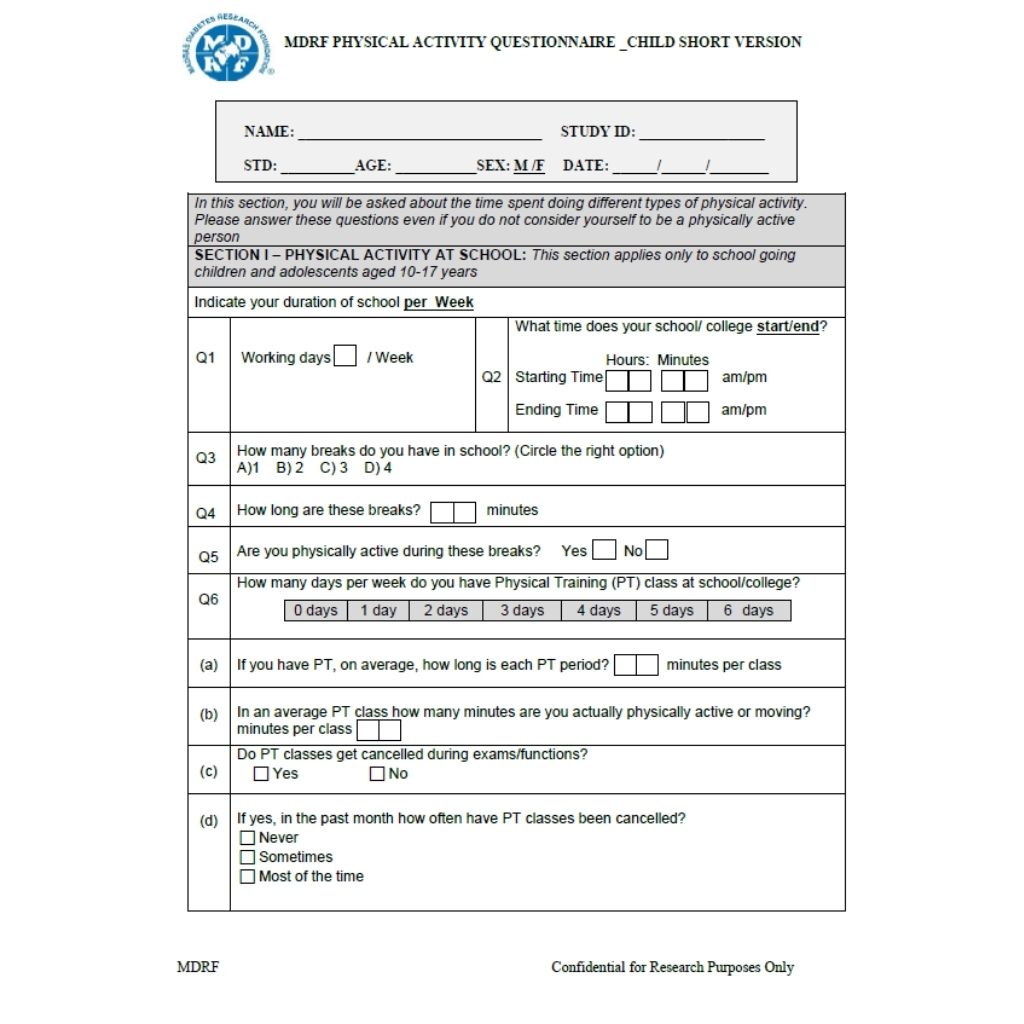
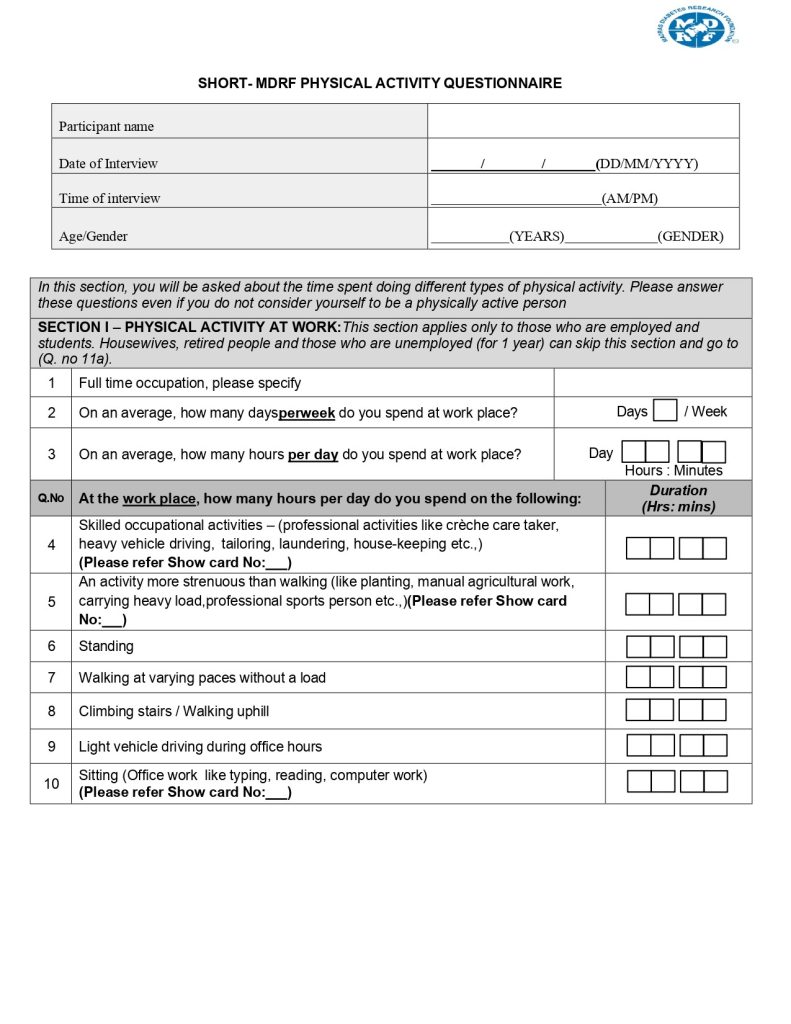
The MPAQ is a standardized questionnaire used to assess physical activity patterns among adolescents, adults, and women with gestational diabetes mellitus (GDM). It captures physical activity across school
, work, transport, household, and leisure-time domains, including type, frequency, duration, and intensity of activities. The tool supports community-based, clinical, and digital health research to evaluate lifestyle behaviors, monitor interventions, and study physical activity in relation to metabolic and maternal health outcomes. The MPAQ has been disseminated through structured training programs conducted by our team. To date, 14 students have been trained, including 9 in adolescent MPAQ, 4 in adult MPAQ, and 1 in GDM MPAQ, and have successfully applied the tool in their academic and research work.
Read More

Stress Assessment Tool for Adolescents
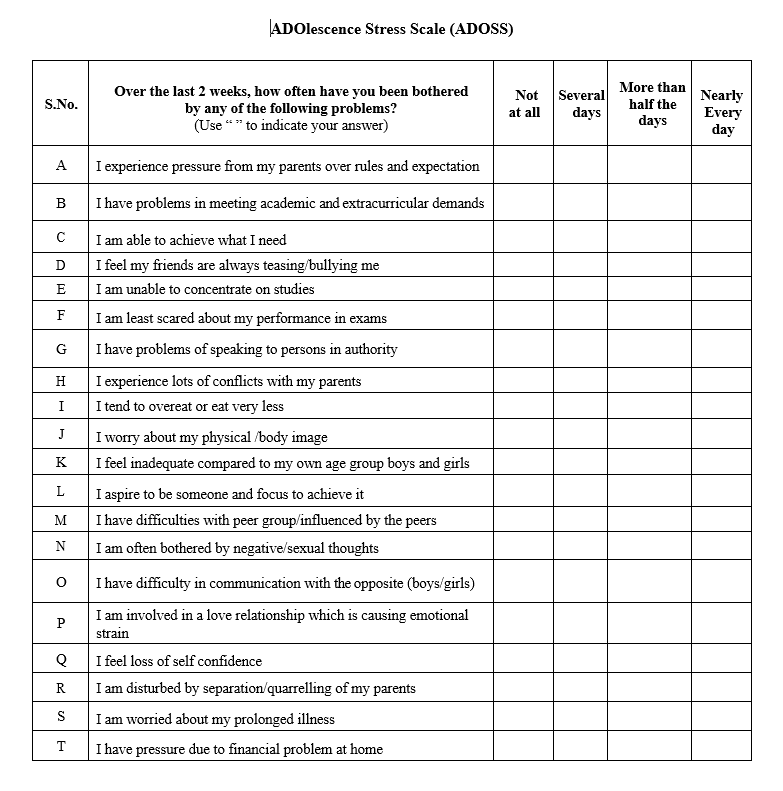
The ADOSS is a standardized, reliable, and valid instrument to assess overall stress levels in adolescents (ages approximately 10–17 years), capturing stress related to personal, academic, family, and social domains. It is used for research and clinical screening to quantify stress exposure and severity among adolescent populations. The tool has been disseminated through structured training programs conducted by our team, and to date, 22 national and international students have been trained and have utilized ADOSS for their academic and research studies.
Read More
Reference Link :
https://pmc.ncbi.nlm.nih.gov/articles/PMC10159577/
MDRF-IDRS for Diabetes Risk Screening

Situational Anxiety Scale (SAS) for Adults with Type 2 Diabetes
The aim of this study was to develop and validate the situational anxiety scale (SAS) during COVID-19 among adults with type 2 diabetes attending a tertiary diabetes center in Southern India.

Patient Perspectives on Decentralized Clinical Trials (DCT)
Decentralized Clinical Trials (DCT) is an emerged transformative approach in clinical research which incorporates both remote monitoring of the study and home-based activity. DCT
enhances recruitment and retention compared to traditional method by disease like T2D remains unexplored in India. Understanding patient’s perception plays a vital role in implementing DCT model.
To evaluate the awareness about decentralized clinical trials (DCT) in participants with type 2 diabetes. Read More
Reference Link :
https://doi.org/10.1007/s13410-025-01561-3

Community Assessment of Depression Using Modified PHQ-12
In India there are very few population-based data on prevalence of depression. The aim of the study was to determine the prevalence of depression in an urban south Indian population.
Reference Link :
https://pubmed.ncbi.nlm.nih.gov/19784380/

Predicting Type 1 Diabetes in Adolescents and Young Adults
HNF1A-MODY and HNF4A-MODY calculator tool
The calculator was developed to determine the probability of having HNF1A-MODY (hepatocyte nuclear factor 1 alpha-maturity-onset diabetes of the young) or HNF4A (hepatocyte nuclear factor 4 alpha)-MODY (the commonest forms of MODY) in Asian Indians using clinical and biochemical criteria. This ethnicity-specific calculator will help us identify individuals with possible HNF1A-MODY or HNF4A-MODY in Asian Indians. This user-friendly, web-based tool would be helpful to select candidates for genetic testing in this population.