
The Data Science Department at MDRF stands at the forefront of integrating advanced analytics with medical research to drive meaningful innovations in diabetes and metabolic health. Harnessing the power of big data, artificial intelligence, and statistical modelling, the department transforms complex clinical, genetic, lifestyle, and population-level datasets into insights that support evidence-based decision-making.
Our team works closely with clinicians, molecular biologists, epidemiologists, and global collaborators to unravel patterns that would otherwise remain hidden. Through machine learning, predictive modelling, data engineering, and real-world evidence analysis, the department contributes to breakthroughs in early diagnosis, personalised treatment strategies, and risk prediction for diabetes and its complications.
The unit also supports national and international research projects, develops digital health tools, and creates analytical frameworks that strengthen public health policies. With state-of-the-art computing infrastructure and a commitment to innovation, the department plays a vital role in shaping the future of diabetes research in India and beyond.
Whether advancing precision medicine, improving clinical workflows, or unlocking new scientific discoveries, the Data Science Department remains dedicated to turning data into impact.
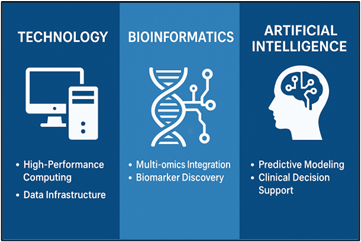
The Data Science Department at the Madras Diabetes Research Foundation (MDRF) strives to advance diabetes research through innovative applications of technology, bioinformatics, and artificial intelligence. Our multidisciplinary team is committed to developing data-driven solutions that enhance precision medicine, facilitate early disease detection, and improve the quality of care for individuals living with diabetes. The Head of the Department (HOD) is Dr V. Baskar.
In addition to supporting large-scale clinical, genomic, and epidemiological studies, the department integrates advanced statistical modelling, machine learning, and predictive analytics to uncover meaningful patterns within complex datasets. These insights help identify risk factors, forecast disease progression, and guide personalised treatment strategies.
The department also collaborates closely with clinicians, laboratory scientists, and public health experts to design digital health tools, strengthen clinical decision-support systems, and build scalable data platforms for translational research. Through continuous innovation, capacity building, and active partnerships with national and international institutions, the Data Science Department plays a pivotal role in realising MDRF’s vision of delivering cutting-edge, evidence-based diabetes research and improving population-level health outcomes.

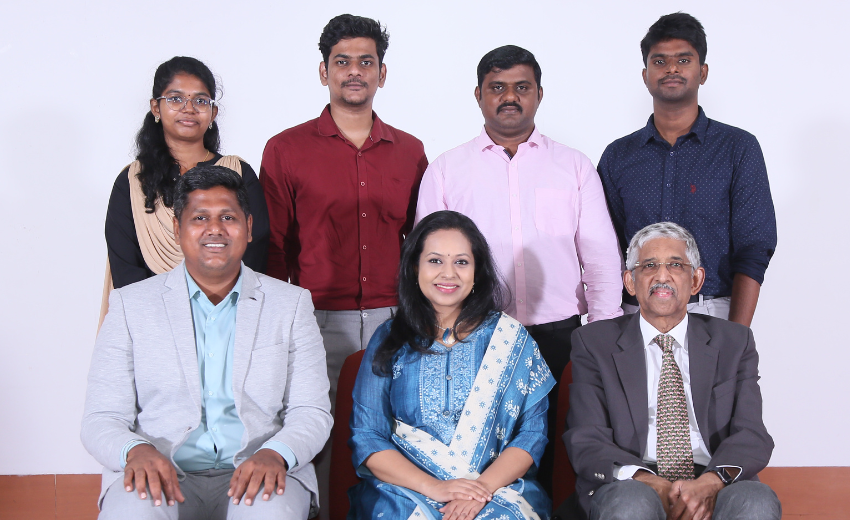
Dr. V. Baskar
Health Data Compliance and Security
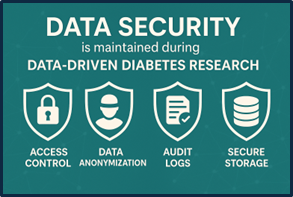
Data driven research impose strong data security guidelines. At Data Science Department, we adhere to high data security regulatory standards based on local guidelines, with established policies, mandatory training for the researchers, and periodic audits to protect patient data confidentiality and integrity.
Ongoing Research
Diabetes Knowledge Ecosystem
Building a FAIR-aligned knowledge ecosystem that provides access to harmonized and analysis-ready data assets for researchers. Engineering the reproducible pipelines that enforce data quality, provenance, and versioning. Knowledge graphs and interactive dashboards surface evidence for clinicians and researchers, enabling cohort discovery, hypothesis generation, research agentic AI and decision support.
Clinical Decision Support Systems (CDSS)
Designing and implementing AI-powered clinical decision support tools integrated with electronic medical records (EMRs) to enhance clinical decision-making, optimize treatment plans, and reduce diabetes-related complications.
Precision Diabetes Analytics
Leveraging machine learning and advanced analytics to classify diabetes subtypes, predict disease progression, and personalize treatment strategies to improve patient outcomes.
Predictive Modelling and Risk Stratification
Leveraging machine learning and advanced analytics to classify diabetes subtypes, predict disease progression, and personalize treatment strategies to improve patient outcomes.
Bioinformatics and Multi-omics Integration
Integrating genomic, proteomic, metabolomic, and clinical datasets through sophisticated bioinformatics pipelines to discover biomarkers, elucidate disease mechanisms, and drive personalized medicine initiatives.
Digital Health Innovation
Developing digital biomarkers and AI-driven solutions, including mobile apps and web-based platforms, for non-invasive screening, continuous monitoring, and self-management of diabetes.
Data Science Computing Facilities
The department is equipped with state-of-the-art computational infrastructure, including High-Performance Computing Servers capable of handling big data analytics from clinical studies, genetic analyses, and advanced image processing tasks. Our infrastructure includes the HPE DL385 Gen11 GPU Server with dual AMD EPYC 9534 processors, 2TB Memory, 23 TB Storage, High power NVIDIA A16 GPU accelerators, and high-performance NVMe storage, providing robust support for extensive computational requirements.
Researchers and scientists interested in utilizing the data science centre facility can request access to gain secure and controlled access for their analytical needs.
Collaborations
The Data Science department actively collaborates with internationally recognised researchers and scientists:
- Moneeza Siddiqui, Lecturer in Genetic Epidemiology, Queen Mary University of London, UK. (Adjunct Research Faculty – Data Science Department, MDRF)
- Nico Steckhan, Researcher & Scientist, Dresden University of Technology, Germany.
If you are interested in collaborating with our ongoing projects and expanding your milestones in Diabetes Research, please write to us.
Latest milestones
- Development and Validation of DIANA (Diabetes Novel Subgroup Assessment tool): A web-based precision medicine tool to determine type 2 diabetes endotype membership and predict individuals at risk of microvascular disease. (Publication: https://doi.org/10.1371/journal.pdig.0000702)
- AI-driven precision approach for individual subtype (stratification), risk prediction and treatment in asian diabetes population (Patent application: 202441022114)
- Type 2 Diabetes Subtypes prediction tool (http://14.143.68.90:6085/)
- Prediabetes Subtypes prediction tool (http://192.168.1.19:6082/)
Interested in collaborations ?