
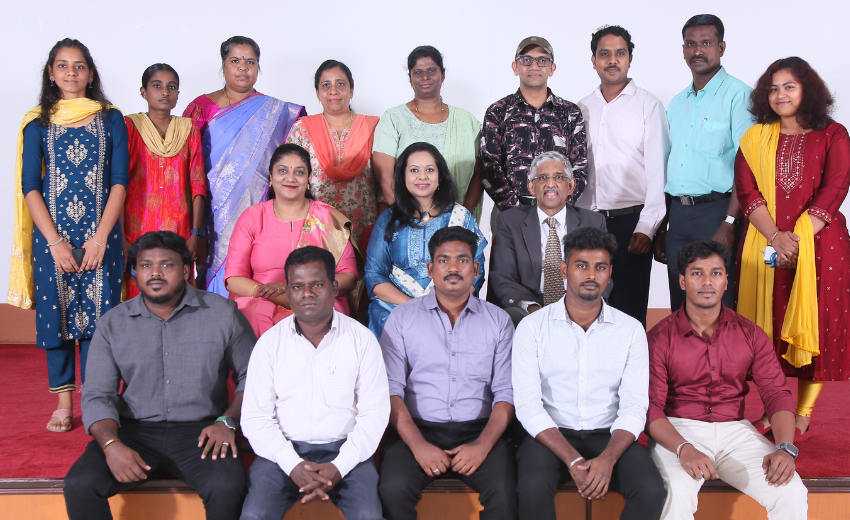
The Research Operations & Diabetes Complications Department, under the able leadership of
Dr. R. Guha Pradeepa, plays a pivotal role in advancing research and education in diabetes and associated metabolic non-communicable diseases (NCDs) such as obesity, hypertension, and dyslipidemia. Its multifaceted activities contribute significantly to both scientific understanding and community health impact.
The department conducts comprehensive cross-sectional, prospective, and surveillance studies to evaluate the prevalence, incidence, and risk factors for diabetes and its complications across diverse urban and rural populations. These efforts generate crucial data that fuel evidence-based prevention and management strategies for diabetes and other NCDs.
A hallmark of the department’s work is its coordination of multicenter and international projects, which enhances knowledge on the burden of diabetes and its complications among researchers and supports community education efforts. Additionally, the department organizes workshops and seminars on non-communicable diseases—particularly diabetes and its complications—providing invaluable learning opportunities for young researchers and scientists.
- Visiting Professor at the Bagchi School of Public Health, Ahmedabad University, Ahmedabad, India
- Recognized Guide for Ph.D at the University of Madras and the Deakin University, Melbourne, Australia
- Member Secretary, Institutional Human Ethical Committee Madras Diabetes Research Foundation
- Member, Institutional Animal Ethical committee, Madras Diabetes Research Foundation and Institutional Human Ethical Committee, Saveetha Dental College, Saveetha University
- Member of the Board of Studies in ” Food Service Management & Dietetics” at Avinashilingam Institute for Home Science and Higher Education for Women,Coimbatore -2025 -2027
Dr. R. Guha Pradeepa
Dr. Pramod Kumar T A

Dr. K. Lakshmi
Ongoing Projects
Association of environmental factors and heavy metal exposure with glycemic parameters in rural regions of Tamil Nadu
Funded by Indian Council of Medical Research (ICMR), New Delhi in collaboration with Sri Ramachandra Institute for Higher Education and Research (2025-2027)
Aim: To estimate exposure-response relationships between exposures to fine particulate matter (PM2.5) and black carbon (BC) and glycemic parameters in rural adult populations of Tamil Nadu.
Understanding the patterns and determinants of health in South Asian people South Asia Biobank
Conducted under NIHR Global Health Research Unit for Cardiovascular Disease and Diabetes- Follow up; Funded by National Institute for Health Research (NIHR) in collaboration with Imperial College of London,UK (2024-2025
Aim: To understand the exposures and mechanisms underlying T2D and CVD and improve risk stratification
Multimorbidity clusters and their impact in cohorts of diabetes patients
Funded by DBT/ Wellcome Trust India Alliance in collaboration with The George Institute for Global Health India (2023-2026)
Aims: To estimate the prevalence of multimorbidity clusters and identify the differences across multimorbidity clusters with respect to sociodemographic, economic, lifestyle and clinical factors
Establishing national normative range of selected blood biochemical parameters in healthy Indian adults
Funded by Indian Council of Medical Research (ICMR), New Delhi (2025-2026)
Aim: To obtain normative range of selected blood biochemical parameters in healthy Indian adult population using data acquired from a large nationally representative survey conducted in India
Research-based Primordial Prevention Model for Reduction of Modifiable Risk Factors for Diabetes
Funded by World Diabetes Foundation (WDF), Denmark in collaboration with Piramal Swasthya Management Research Institute (PSMRI), Hyderabad (2025-2028)
Aim: To assess the prevalence as well as different etiological features of diabetes, obesity and hypertension among 4000 adolescents and 10000 adults in tribes of 25 districts across 5 states of India (Madhya Pradesh, Maharashtra, Chhattisgarh, Jharkhand & Odisha)
Impact of cooking fuel use on glycemic parameters in the rural population of Tamil Nadu (FLAME)
Conducted under GEOHealth HEALS , Funded by NIH in collaboration with Harvard T.H.Chan School of Public Health (HSPH), USA and Centre for Chronic Disease Control (CCDC), India (2025-2026)
Aim: To identify the fuel use patterns and its relation to glycemic parameters among the selected rural households and to understand the community’s perception on the use of different fuels, fuel choices, fuel stacking, cooking practices among the selected rural households
Exposure to indoor air pollutants measured by low-cost monitors in selected villages of rural south India
Funded by Lakshmi Mittal and Family South Asia Institute – Harvard Global Research Support Centre India in in collaboration with Harvard T.H.Chan School of Public Health (HSPH), USA. (2025-2026)
Aim: To estimate the level of indoor air pollutant (PM2.5) levels using low-cost air quality monitors in the indoor environments of selected rural households in South India.
International And National Training Programs
Clinical Research Training for NCD studies in India
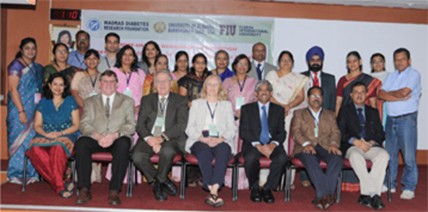
NIH Grant Funded by the Fogarty International Center in Collaboration with the University of Alabama at Birmingham (UAB), USA (2001–2016)
This initiative trained epidemiologists and community health specialists in the prevention and control of non-communicable diseases (NCDs) both within India and internationally. The primary objective of the programme was to strengthen capacity-building efforts in India and to develop effective strategies for the prevention of NCDs in general, with a particular focus on diabetes and cardiovascular diseases.
To support national and international planning efforts for NCD prevention, an International Seminar on Prevention and Control of Non-Communicable Diseases (NCDs) was organised, along with an intensive training programme. Since its inception in 2003, a total of 3,650 undergraduate students, postgraduate students, and faculty members from medical colleges and institutions across almost all Indian states—and several neighbouring countries—have participated in seminars and other capacity-building workshops conducted at the Madras Diabetes Research Foundation (MDRF) and six other medical colleges.
Of these participants:
883 attended the in-house workshops,
463 took part in the intensive interactive sessions,
244 received training in advanced techniques in genomics, and
37 completed short-term training programmes held in the United States.
Coordinating training for International and National trainees
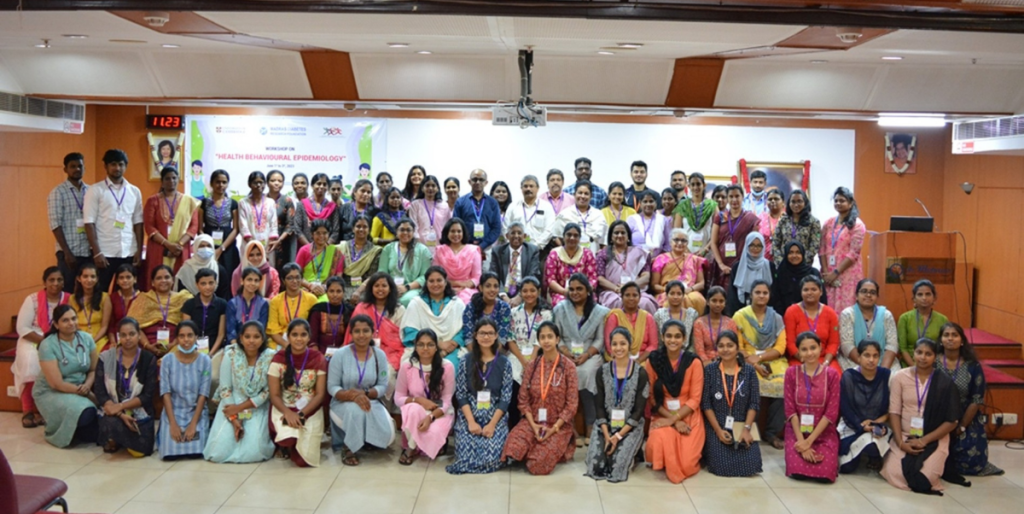
Training and Capacity-Building Initiatives at MDRF
MDRF provides diabetes-related training to both national and international students, with a particular focus on learners from developing countries where specialised facilities are limited. These efforts aim to strengthen global research capacity in the field of diabetes. As part of this mission, MDRF offers short-term training opportunities for overseas students from diverse academic backgrounds.
During their training period, students are exposed to a wide range of departments at MDRF, including epidemiology, clinical trials, biochemistry, cell and molecular biology, genetics, and the tissue culture facility. This multidisciplinary exposure enables participants to gain valuable hands-on experience and insight into diabetes research from both clinical and laboratory perspectives.
Organizing seminars/workshops/symposia
Workshop on “Health Behavioural Epidemiology”
In collaboration with the University of Cambridge under the NIHR Global Health Research Unit and Network for Diabetes and Cardiovascular Disease in South Asia
1st – 3rd June 2023
This three-day workshop, attended by 66 participants in person and 158 participants online, provided an in-depth exploration of Behavioural Epidemiology. The programme focused on health-related behaviours such as physical activity and dietary patterns, and highlighted major public health challenges alongside cutting-edge research in the field.
The module was designed to demonstrate how key public health principles and epidemiological concepts can be applied to real-world issues. By the end of the workshop, participants had gained a deeper understanding of behavioural epidemiology and its relevance to contemporary public health research.
Completed Projects
Follow-up of ICMR-INDIAB Phase-I & Northeast Incidence rates, complications and mortality rates and secular trends in prevalence of diabetes and pre diabetes
ICMR- India Diabetes [INDIAB] Study – Union Territories (Excluding Chandigarh & Puducherry)
The Indian Council of Medical Research -India Diabetes (ICMR- INDIAB) Task Force Project
The Treatment of Booking Gestational Diabetes Mellitus (TOBOGM) trial
Conducted in collaboration with Western Sydney University, Campbelltown, NSW (2022-2023)
The TOBOGM study was a randomized control trial, showing clear benefits of diagnosing and treating early gestational Diabetes (eGDM). ToBOGM also showed that the best results were seen in those screened before 14 weeks of pregnancy.
Telemedicine Project For ScreENing Diabetes And Its Complications (TREND)
Understanding the patterns and determinants of health in South Asian people South Asia Biobank
COV-Ind-UK: Prospective investigation of the determinants for COVID-19 outcomes amongst South Asians in India and the United Kingdom
Lifestyle InterVention IN Gestational Diabetes (LIVING) study
Publications
1. Mohan V, Rani CSS, Sankari GU, Pradeepa R, Unnikrishnan R, Rahulashankiruthiyayan T, Venisha KG, Geetha L, Venkatesan U, Anjana RM. Sex differences in the incidence of complications among people with diabetes in a South Indian population: 12 years follow up of CURES study (CURES-159). Indian J Med Res. 2025;162:863-872.
2. Lakshmi N, Anjana RM, Venkatesan U, Palmer CN, Mohan V, Rakesh H, Pradeepa R. Traditional cooking fuels and type 2 diabetes in rural South India: insights from the TREND study. Int J Environ Health Res. 2025; 24:1-10.
3. Anjana RM, Sudha V, Abirami K, Gayathri R, Manasa VS, Deepa M, Pradeepa R, Unnikrishnan R, Joshi S, Saboo B, Gupta A, Joshi PP, Adhikari P, Jabbar PK, Jain SM, Chowdhury S, Purty AJ, Tripathy SK, Behera S, Mahanta J, Laxmaiah A, Krishnaswamy K, Kurpad AV, Das AK, Dhaliwal RS, Kaur T, Bhupathiraju SN, Mohan V. Dietary profiles and associated metabolic risk factors in India from the ICMR-INDIAB survey-21. Nat Med. 2025;31:3813-3824
4. Mohan V, Deepa M, Tandon N, Pradeepa R, Subashini R, Janeline L, Lakshmy R, Bajaj S, Dash K, Adhikari P, John M, Ram U, Sagili H, Sriram U, Chandhiok N, Das AK, Unnikrishnan R, Bhatnagar S, Joshi S, Kaur T, Dhaliwal RS, Anjana RM; ICMR-INDIAB Collaborative Study Group; ICMR-INDIAB Collaborative Study Group – Project Staff; ICMR-INDIAB Collaborative Study Group – Expert Group; ICMR-INDIAB Collaborative Study Group – State Principal Investigators and Co-Investigators. Prevalence of gestational diabetes mellitus in India: The ICMR-INDIAB national study (ICMR-INDIAB-24). Indian J Med Res. 2025;162:460-469.
5. Abhinav RP, Pradeepa R, Arunkumar MN, Anjana RM, PramodKumar TA, Livingston PM, Bennett CM, Mohan V, Williams J. Prevalence of type 2 diabetes among oral cancer patients in a voluntary charitable cancer care center in South India. Journal of Diabetology. 2025;16:358-65
Interested in collaborations ?